Simpler website publishing
Portfolio Content System
A portfolio with case studies maintained as local content alongside the application.
Outcome
Project content can be reviewed in Git and published with the site, without runtime CMS calls.
My role
Designer / Engineer
How I helped
- Designed and built the website.
- Moved case studies into version-controlled MDX.
- Set up server rendering, hosting, and accessible motion.
Product
The workflow in context
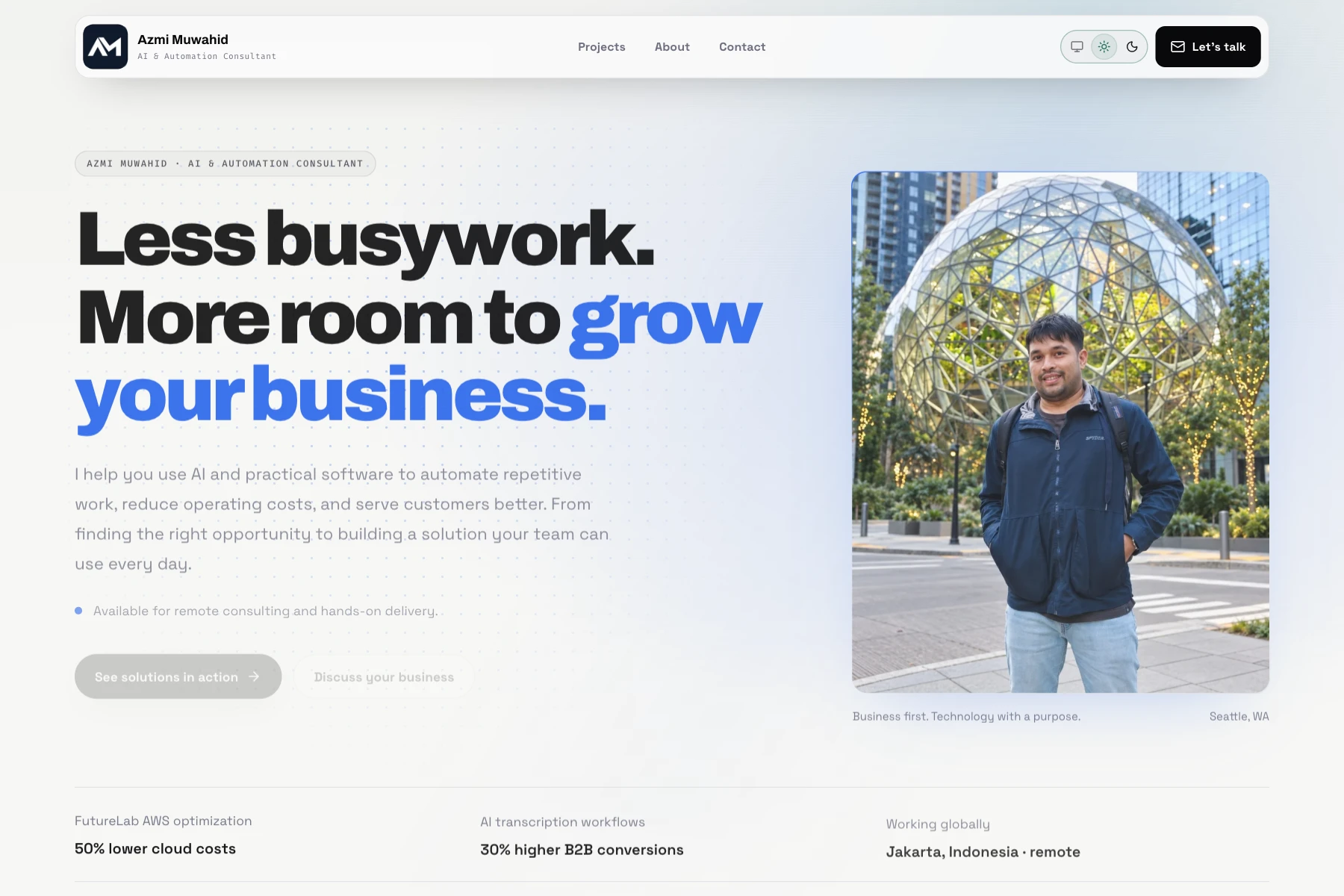
Screenshot of the current local implementation; the live deployment still serves the previous version.
The solution
Keep listing metadata in frontmatter and long-form case studies in MDX. Shared Svelte layouts provide the presentation, while content files own each case study.
What changed
The site compiles local project files with mdsvex, validates metadata, and loads case-study components by route. Stable slugs preserve project links without a runtime CMS dependency.
Technical decisions
- Keep content trusted and version-controlled; compile it during the application build.
- Use server loaders for metadata and route-split components for article bodies.
- Use Motion’s small native-animation API for entrances and CSS for portrait depth.
- Respect reduced-motion preferences and preserve readable server-rendered content without JavaScript.
Lessons learned
A portfolio should make content easy to keep useful. For a developer-maintained site, local files provide a straightforward review and publishing workflow.
AI system implementation
No runtime AI service is used by the portfolio content pipeline. Trusted MDX compiles during the build; server loaders validate metadata and route-split components render case studies. Project filters and motion run through ordinary application and browser APIs.
Could a similar approach help your business?
Tell me where work gets stuck. We can identify a practical first improvement and what success should look like.
Discuss your challenge